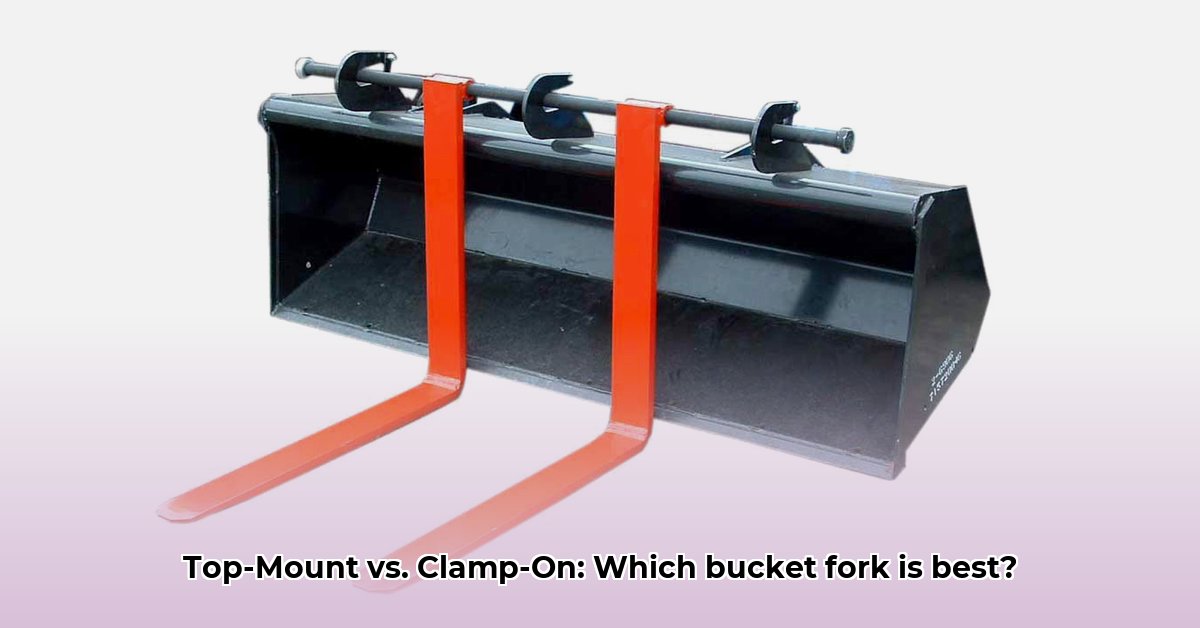
Picking the right bucket forks significantly impacts your tractor's efficiency and safety. This guide compares top-mount and clamp-on forks, helping you choose the best option for your needs. We'll analyze features, costs, and installation, providing a clear decision-making framework. For more options, check out these tractor forks.
Top-Mount Bucket Forks: Strength and Stability
Top-mount forks integrate directly with your tractor's loader, offering superior strength and stability (think of it as a permanent, solid connection). This makes them ideal for heavy lifting and frequent use. Brands like All-Pro are known for their robust designs and relatively easy installation.
Pros:
- Exceptional strength and durability, minimizing the risk of bending or breaking under stress.
- Enhanced stability, reducing the risk of accidents during operation. This is especially crucial when handling heavy loads.
- Generally easier and faster installation compared to clamp-on options. Reduced downtime means increased productivity.
- Improved visibility of the load, enhancing safety and precision during material handling.
Cons:
- Higher initial cost compared to clamp-on alternatives.
- Installation might require specialized tools or professional assistance, adding to the overall expense. The complexity of installation varies depending on the model and tractor.
Clamp-On Bucket Forks: A Budget-Friendly Solution
Clamp-on forks, readily available at retailers like Home Depot, attach to your existing bucket. This provides a cost-effective entry point, but with certain compromises.
Pros:
- Lower initial purchase price, making them accessible to farmers with tighter budgets.
- Simple and quick installation; typically only requiring basic tools. Quick setup is ideal for short-term projects.
Cons:
- Reduced stability compared to top-mount forks. This increases the risk of instability, especially when lifting heavier items.
- Potential for slippage or instability with heavy loads, demanding cautious operation.
- May reduce visibility of the load due to the bucket obscuring the view.
- Compatibility may be limited; they might not fit all tractors and loaders, so always check specifications before purchase.
Comparative Analysis: Top-Mount vs. Clamp-On
This table summarizes the key differences:
| Feature | Top-Mount Forks | Clamp-On Forks |
|---|---|---|
| Cost | Higher initial investment | Lower initial cost |
| Strength | Superior; designed for heavier loads | Lower; suitable for lighter loads |
| Stability | Excellent; provides secure attachment | Lower; greater risk of instability |
| Installation | Generally easier and faster | Simpler but may require adjustments |
| Compatibility | Requires specific model matches to your loader | More widely compatible, but verify specifications |
| Load Center | Lower, enhancing stability | Higher, potentially reducing stability |
| Visibility | Better; improved operator awareness | Reduced; can hinder precise load placement |
Decision-Making Framework: Choosing the Right Forks
Assess your lifting needs: What's the heaviest load you'll regularly lift? Frequent heavy lifting demands the superior strength of top-mount forks. Occasional light use might justify the cost savings of a clamp-on option.
Check tractor compatibility: Always consult your tractor's manual to ensure compatibility with both the weight and physical dimensions of the forks. Ignoring this step could lead to safety issues.
Budget considerations: Top-mount forks represent a higher upfront cost but often translate to lower long-term expenses due to increased durability and longevity. Clamp-on forks provide an immediate cost advantage but may necessitate more frequent replacements.
Maintenance expectations: Both types require regular inspection. Top-mount forks, because of their more robust build, might need less frequent maintenance and replacements.
Potential Problems and Mitigation Strategies
| Potential Problem | Top-Mount Forks | Clamp-On Forks | Mitigation Strategies |
|---|---|---|---|
| Installation Errors | Less Likely | More Likely | Follow instructions meticulously; professional installation advised. |
| Structural Failure | Less Likely | More Likely | Regular inspections; avoid overloading; adhere strictly to weight limits. |
| Compatibility Issues | Possible | Highly Possible | Verify compatibility before purchase; consult with a dealer. |
| Increased Load Center | Lower Impact | Higher Impact | Operate cautiously, aware of shifting weight distribution. |
| Increased Turning Radius | Lower Impact | Higher Impact | Operate with extra care, considering the increased turning radius. |
Remember, the best choice depends on your unique needs. Consulting with a local equipment dealer is highly recommended for personalized advice. They can help you select the optimal bucket forks to enhance your farm's productivity and safety.